
How slab leaks develop in Antelope tract homes
Why 1980s and 1990s slab-on-grade tract homes in Antelope develop under-slab copper pinhole leaks, and how to catch them early before structural foundation damage occurs.
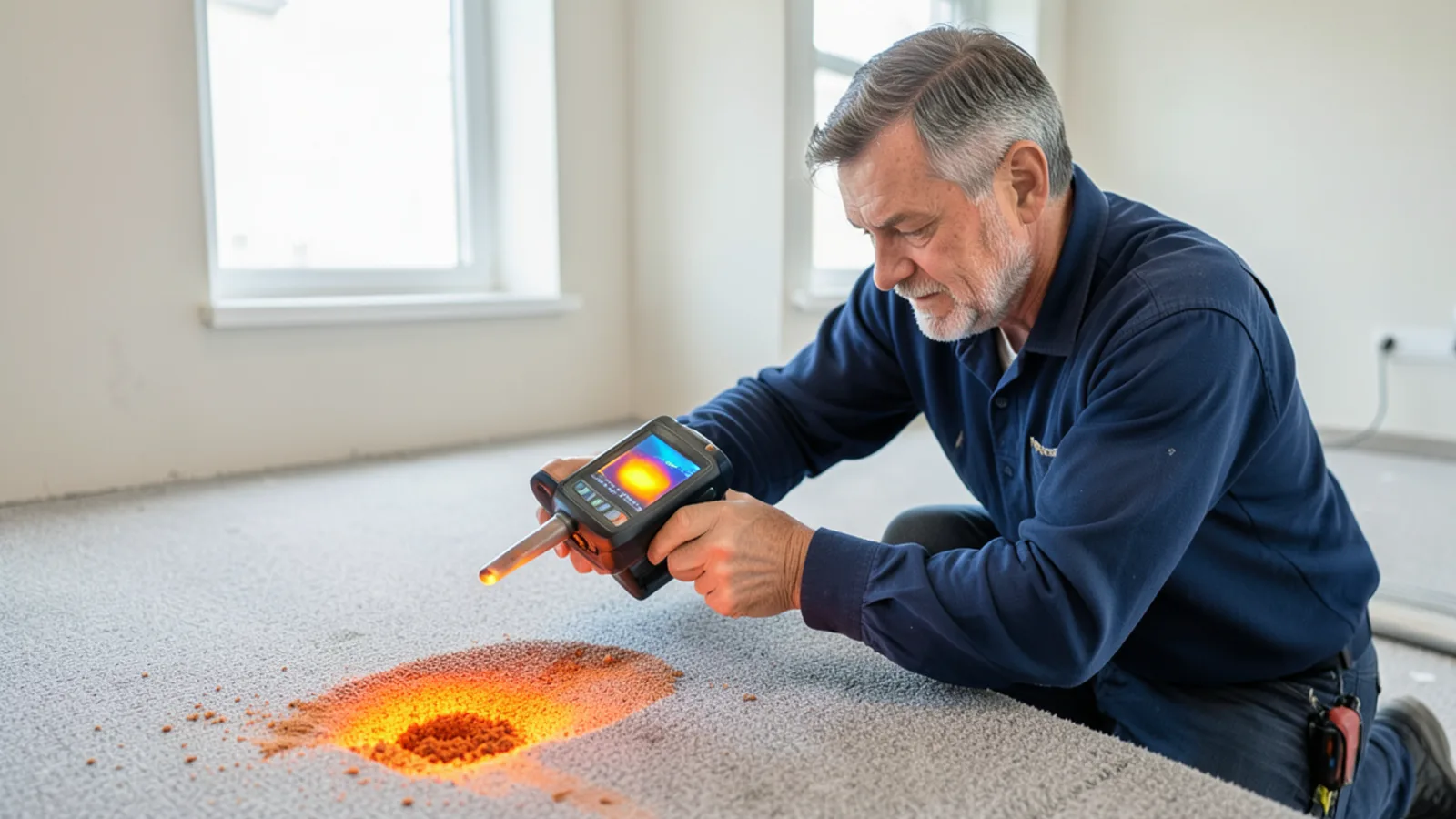
A slab leak in an Antelope tract home is a pressurized water leak occurring in the copper supply lines buried beneath the concrete foundation. If you suspect an under-slab leak, confirm it immediately by checking whether the low-flow dial on your water meter spins when all faucets are shut off, or by feeling for localized warm floor tiles.
Single-family residences constructed across Antelope between 1985 and 2004 sit on monolithic slab-on-grade foundations. During original subdivision construction, plumbing contractors laid soft Type M or Type L copper tubing across native gravel sub-bases before pouring four-to-six-inch concrete foundation slabs directly over the piping network.
Over twenty to thirty-five years of continuous domestic water movement, seasonal soil movement, and water chemistry friction, these buried pipes develop microscopic pinholes. Left unaddressed, escaping pressurized water erodes structural sub-base soil, damages finished flooring, and wastes tens of thousands of gallons of municipal water.
Early Warning Signs of an Under-Slab Leak
Slab leaks do not always cause standing water on top of the floor immediately. Pressurized water follows the path of least resistance, often soaking into sub-slab gravel and native clay soil for weeks before hydrostatic pressure forces moisture upward through microscopic pores in the concrete slab.
Homeowners should monitor their property for these verified warning signs: - Localized Warm Floor Spots: If you feel an isolated warm spot on your carpet, tile, or laminate flooring with bare feet, you have an active leak on your hot water domestic supply line. Hot water heats the concrete slab, which radiates upward into finished flooring. - Sudden Water Utility Spikes: An unexplained increase of $60 to $250 on your bi-monthly Sacramento Suburban Water District (SSWD) bill without a change in household habits indicates continuous underground water loss. - The Sound of Hissing Water: Hearing continuous water movement, rushing water, or faint hissing behind walls, under hallway floors, or near bathroom vanities when all fixtures are closed. - Continuous Water Meter Flow: The low-flow indicator triangle or digital flow rate monitor on your water meter continues registering flow when the house is completely quiet. - Damp Baseboards and Mold Odors: Moisture wicking up through concrete into bottom wall framing causes drywall softening, baseboard warping, paint peeling, and localized mildew odors.
The Physics of Copper Pinhole Corrosion
Why do Antelope tract homes experience slab leaks at such high rates after reaching twenty years of age? The failure is rarely random; it is driven by three interacting mechanical and environmental factors:
| Contributing Factor | Physical Failure Mechanism | Impact on Buried Copper Tubing |
|---|---|---|
| Expansive Adobe Clay Soil | Heavy clay soils in northern Sacramento County expand during wet winters and contract drastically during 100°F summers. | Foundation soil movement causes rigid copper tubing to rub against hard, unbedded aggregate stones in the foundation base, wearing thin spots into pipe walls. |
| Hydraulic Flow Velocity Turbulence | High municipal water velocity through unreamed copper fittings and sharp 90-degree elbows. | Creates microscopic eddy currents and hydraulic friction that erode the internal protective copper oxide patina, causing localized pitting corrosion. |
| Continuous Recirculation Friction | Hot water recirculation loops running continuously without timer controls. | Constant high-temperature water circulation accelerates mechanical pipe erosion and thermal expansion cycling against concrete. |
Practitioner Insight
> If your Antelope home has a hot water recirculation pump installed above the water heater, ensure it is set to a digital timer or on-demand push button rather than running continuously around the clock. Continuous hot water recirculation can cut the lifespan of under-slab copper piping in half by accelerating internal friction erosion.
Diagnostic Verification: The 5-Step Water Meter Isolation Test
Before calling a plumbing contractor, you can perform a definitive diagnostic test to determine whether an active leak is located under your foundation or isolated to an appliance:
- Turn Off All Indoor and Outdoor Fixtures: Verify that every sink, shower, washing machine, dishwasher, ice maker, and exterior hose bibb is completely shut off.
- Locate Your Street Water Meter Box: Open the concrete utility meter box located near your sidewalk or front curb line. Clean off any dirt from the meter glass register.
- Observe the Low-Flow Leak Indicator: Look closely at the small red triangle, silver star, or digital flow indicator on the meter face. If the indicator is rotating or registering flow, water is escaping somewhere on the property.
- Isolate the Water Heater Shutoff Valve: Walk into your garage and close the cold-water inlet valve located on top of the water heater by turning the handle 90 degrees clockwise.
- Re-check the Meter Register: Walk back to the street meter. If the low-flow indicator has stopped spinning entirely, the leak is located on the pressurized hot water distribution lines beneath your slab. If the meter continues spinning, the leak is situated on the cold water supply lines or main yard service line.
Repair Strategies: Direct Penetration vs. Overhead PEX Rerouting
Once an electronic leak detection specialist pinpoints the underground leak coordinates using acoustic ground microphones and thermal imaging, you must select an appropriate repair method:
| Repair Strategy | Process Overview | Structural Impact | Relative Cost | Future Leak Risk |
|---|---|---|---|---|
| Direct Slab Penetration (Spot Repair) | Cut finished floor, jackhammer concrete slab, excavate soil, and braze a new copper section in place. | High: damages finished flooring, creates concrete dust, and requires structural sub-base compaction. | Moderate ($1,500 – $2,800) | High: leaves remaining 30-year-old copper lines vulnerable to future pinholes. |
| Overhead PEX Rerouting (Recommended) | Abandon failed under-slab pipe in place; route a continuous Uponor PEX-a line overhead through attic and walls. | Minimal: zero concrete cutting; only small, surgical drywall access cuts behind vanities or closets. | Economical ($1,800 – $3,500) | Zero: completely bypasses underground slab and eliminates future leak threats along that run. |
| Whole-House PEX Repipe | Completely abandon all under-slab copper lines and install new hot and cold PEX distribution throughout. | Moderate: surgical wall incisions; completely replaces all domestic water lines from the main riser. | Comprehensive ($6,500 – $11,000) | Permanently eliminates under-slab pipe failures for the entire home. |
Homeowners Insurance and Water Damage Coverage
Homeowners insurance policies in California treat slab leak claims with specific coverage distinctions: - Covered Costs: Most standard policies cover the cost of locating the leak (electronic detection fees) and the secondary water damage caused by escaping water—including replacement of soaked carpets, ruined baseboards, damaged cabinetry, and drywall remediation. - Excluded Costs: The plumbing repair of the pipe itself (the mechanical labor and materials to solder or reroute the pipe) is typically excluded from coverage as normal home maintenance, costing $1,500 to $3,000 out-of-pocket. - Documentation Requirements: To ensure an insurance adjuster approves secondary damage claims, obtain a formal written diagnostic report from a licensed C-36 plumbing contractor detailing exact acoustic coordinates, pressure decay test results, and water meter verification logs.
Sacramento County Building Code and Permit Standards
All permanent slab leak repairs and overhead PEX reroutes in unincorporated Antelope require a trade plumbing permit from the Sacramento County Building Inspection Division. County plumbing codes mandate: - All replacement potable water piping must be certified to NSF/ANSI Standard 61. - Flexible PEX-a piping routed through unconditioned attic spaces must be installed below attic thermal insulation blankets or sleeved in closed-cell foam insulation to protect against winter freezing and summer heat degradation. - Repaired copper sections brazed under concrete must use silver-bearing brazing alloy (sil-fos) with a minimum melting temperature of 1,000°F; soft lead-free solders are prohibited beneath concrete slabs. - A pressurized air test holding at 50 PSI must be verified and signed off by a county building inspector before closing wall access cavities.
For certified electronic leak detection and minimally invasive overhead PEX reroutes in Antelope, contact our local dispatch center on Elverta Rd at (207) 419-2600.
Need Direct Technical Advice from Our Plumbers?
Dispatched from 4320 Elverta Rd in Antelope. We provide honest trade diagnostics and transparent itemized pricing: (207) 419-2600.
Operating from 4320 Elverta Rd, Antelope, CA 95843 • Sacramento County
How to Verify Any California Plumbing Contractor
In California, contracting plumbers must hold an active C-36 Plumbing classification issued by the Contractors State License Board (CSLB). California does not issue tiered apprentice-to-master classifications; all contractors hold the C-36 credential. You can verify any contractor's active standing, workers' compensation coverage, and surety bond by searching their license number or business name on the official CSLB portal.
Frequently Asked Questions: Identifying Slab Leaks in 1980s Antelope Tract Homes
Clear technical answers to common homeowner questions.
Related Services
Related Communities
Have Questions About Your Home's Plumbing?
Our technicians are based on Elverta Rd in Antelope. Call (207) 419-2600 for honest advice, diagnostic testing and itemized pricing.
Operating from 4320 Elverta Rd, Antelope, CA 95843 • Sacramento County