
How to size a replacement water heater for your Antelope home
How to calculate peak-hour hot water demand and select between 40-gallon, 50-gallon, and tankless systems for your Antelope home.
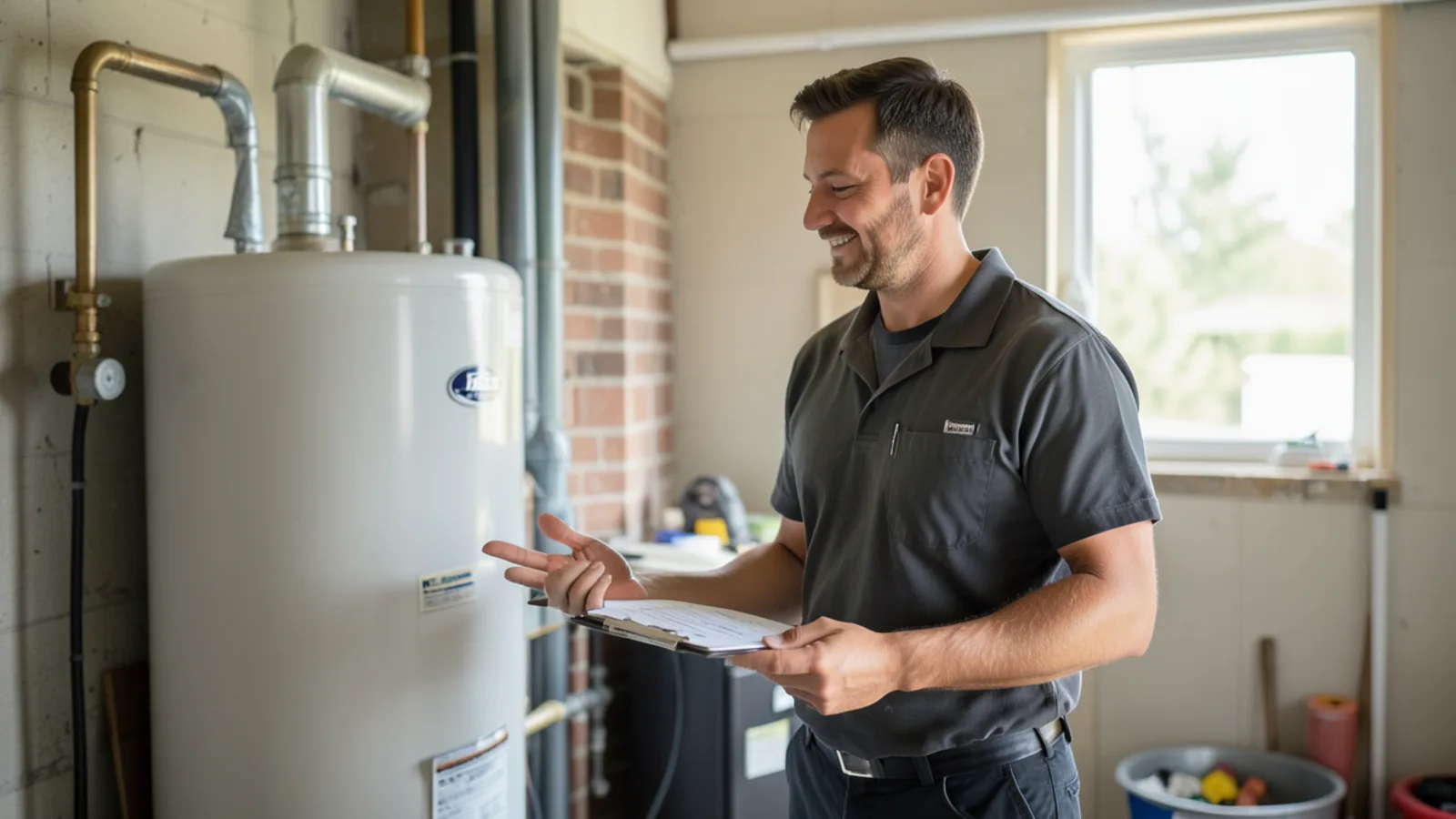
When your water heater begins leaking or failing to keep up with morning showers, rushing out to purchase the first tank on the home improvement store shelf often leads to frustrating cold showers, elevated gas bills, or costly installation clearance conflicts. Choosing the correct water heater size requires understanding how your household uses hot water during peak morning or evening hours, the physics of incoming water temperatures, and California plumbing safety codes.
In Antelope tract subdivisions—such as Blackfoot Way, Poker Lane, and neighborhoods along Elverta and Center Roads—most homes were built between 1985 and 2004 with two to three full bathrooms. Sizing a replacement water heater correctly ensures your household enjoys continuous hot water while keeping utility expenses balanced.
## Quick Answer: How to Correctly Size a Water Heater in Antelope
To size a replacement water heater accurately, match the unit's First Hour Rating (FHR for storage tanks) or Gallons Per Minute (GPM for tankless systems) to your home's peak-hour consumption. In northern Sacramento County, winter groundwater temperatures drop to 50°F, requiring a substantial 70°F temperature rise to achieve comfortable 120°F water.
For three- to four-bedroom Antelope homes with two to three bathrooms, a 50-gallon high-recovery natural gas tank (FHR of 75 to 88 gallons) or a high-efficiency condensing tankless system rated at 8.0 to 9.5 GPM (199,000 BTU) provides reliable coverage. All installations must include dual seismic strapping and a thermal expansion tank permitted through the Sacramento County Building Inspection Division. For personalized sizing and installation estimates, call our licensed plumbers at (207) 419-2600.
## Understanding First Hour Rating (FHR) vs. Nominal Storage Gallons
A widespread misconception among homeowners is that a 50-gallon water heater provides 50 gallons of ready-to-use hot water. In reality, as hot water is drawn from the top of the tank to feed showers and faucets, cold municipal water enters the bottom through a plastic dip tube, continuously diluting the stored heat. In practice, a standard storage tank delivers approximately 70% of its volume in usable hot water before the water temperature drops noticeably.
The true metric of tank water heater capability is the **First Hour Rating (FHR)**, displayed prominently on the federal yellow EnergyGuide label: - **What FHR Measures**: FHR is the total number of gallons of hot water the appliance can deliver in the first hour of operation starting from a fully heated tank. - **Why Recovery Rate Matters**: FHR combines the tank's physical storage volume with its burner recovery rate (how many gallons the burner can heat from cold to hot in one hour). A 40-gallon tank with a high-BTU burner can produce an FHR comparable to a basic 50-gallon tank with a smaller burner. - **Matching Your Household**: When sizing a storage tank, your calculated peak-hour demand must not exceed the unit's FHR.
## Calculating Peak Hour Demand for Antelope Tract Homes
To size your water heater accurately, determine your household's busiest single sixty-minute window of hot water use. In most working households, this peak hour occurs between 6:30 AM and 7:30 AM as multiple family members get ready for work and school simultaneously.
Add up the hot water draw of simultaneous appliances and plumbing fixtures using average fixture consumption rates:
| Fixture or Household Activity | Average Gallons Per Use | Typical Peak-Hour Hot Water Share (120°F Water) |
|---|---|---|
| Standard Shower (10 minutes) | 20 Gallons | 14 Gallons (mixed with cold) |
| WaterSense Low-Flow Shower (10 minutes) | 15 Gallons | 10 Gallons (mixed with cold) |
| Bath Tub Fill | 30 Gallons | 22 Gallons |
| Shaving / Handwashing with tap running | 4 Gallons | 3 Gallons |
| Automatic Dishwasher Cycle | 6–8 Gallons | 6–8 Gallons (draws straight hot water) |
| Washing Machine (Warm / Hot Cycle) | 18–25 Gallons | 14–20 Gallons |
Sizing Scenario: Typical Antelope 4-Bedroom Home Consider a family of four living off Poker Lane: 1. Two morning showers running back-to-back: 28 gallons. 2. One family member brushing teeth and shaving at the sink: 3 gallons. 3. Dishwasher running after breakfast: 7 gallons. 4. One load of gym clothes started in the washer: 15 gallons. - **Total Peak Hour Demand**: 28 + 3 + 7 + 15 = **53 Gallons of Hot Water**.
A 40-gallon basic tank with an FHR of 50 gallons would leave the final shower cold. Installing a 50-gallon high-recovery unit (FHR 75–88 gallons) provides a comfortable 22-gallon cushion, ensuring consistent water temperature throughout the morning rush.
Practitioner Insight
> **Practitioner Insight**: When replacing a water heater in an Antelope two-story home, always check whether your plumbing system has a pressure-reducing valve (PRV) or backflow check valve installed at the street meter. These devices create a closed system. Sacramento County plumbing code mandates installing a calibrated thermal expansion tank on the cold water inlet line to absorb hydraulic pressure spikes as water heats up, preventing early tank ruptures.
## Comparing Water Heater Technologies: Tank vs. Tankless vs. Hybrid Heat Pump
Choosing the right appliance requires balancing fuel source, upfront equipment investment, monthly utility costs, and garage installation space.
| Feature / Metric | Atmospheric Gas Storage Tank | Condensing Gas Tankless | Hybrid Electric Heat Pump (HPWH) |
|---|---|---|---|
| Sizing Metric | First Hour Rating (FHR in Gallons) | Flow Rate (GPM at specific temp rise) | First Hour Rating (FHR in Gallons) |
| Target Antelope Household | 3–4 occupants; 2–3 baths | 3–5 occupants; 2–4 baths; luxury tubs | 2–4 occupants; SMUD electric incentive |
| Winter Incoming Temp Impact | Longer recovery time between draws | Maximum flow drops from 9 GPM to 5.5 GPM | Slower recovery in cold winter garages |
| Uniform Energy Factor (UEF) | 0.58 to 0.64 | 0.93 to 0.96 | 3.30 to 3.80 |
| Sacramento Garage Climate Resilience | Excellent; withstands 115°F summer heat | Excellent; compact wall-mounted unit | Excellent; cools garage during hot summers |
| Sacramento County Permit Required? | Yes (Sacramento County Building Inspection) | Yes (Gas line, electrical & vent review) | Yes (Electrical circuit & panel capacity review) |
## Sizing Tankless Flow Rates (GPM) for Sacramento Ground Water Temperatures
If you are upgrading from a tank to an on-demand tankless water heater, the sizing math switches completely from stored gallons to **Gallons Per Minute (GPM)** and **temperature rise**.
Tankless water heaters do not store pre-heated water. Instead, cold water flows through a high-output burner heat exchanger the instant a faucet is turned on. The maximum flow rate a tankless unit can produce depends entirely on how cold the water is when it enters the home:
- **Incoming Groundwater Temperatures**: In northern Sacramento County, tap water delivered by the Sacramento Suburban Water District or California American Water averages 70°F to 75°F in August, but drops to 50°F to 55°F in December and January.
- **Calculating Temperature Rise**: To achieve an ideal delivery temperature of 120°F from 50°F winter groundwater requires a **70°F temperature rise** (120°F - 50°F = 70°F).
- **Determining Fixture Flow**: - Modern showerhead: 1.8 to 2.5 GPM. - Kitchen sink faucet: 1.5 to 2.2 GPM. - Lavatory sink: 1.0 to 1.5 GPM. - Washing machine: 2.0 to 3.0 GPM.
- **Selecting the Unit**: If you want to run two simultaneous 2.0 GPM showers and a 1.5 GPM kitchen sink during a cold January morning, you need a unit capable of delivering 5.5 GPM at a 70°F temperature rise (2.0 + 2.0 + 1.5 = 5.5 GPM). A 199,000 BTU condensing gas unit produces approximately 5.8 GPM at a 70°F rise and up to 9.5 GPM during mild summer months, making it the ideal specification for Antelope homes.
## California Plumbing Code, Seismic Strapping, and Sacramento County Permits
Installing a replacement water heater in Antelope involves strict safety and energy regulations enforced by the Sacramento County Building Inspection Division:
- **Dual Seismic Strapping (CPC 507.2)**: California Plumbing Code Section 507.2 and California Health and Safety Code Section 19211 mandate that all water heaters must be secured to resist seismic movement. Sacramento County requires two heavy-gauge metal straps wrapped around the tank: one in the upper third and one in the lower third, with a minimum 4-inch vertical clearance above burner controls. Straps must anchor directly into solid wall studs with heavy lag bolts.
- **Combustion Air & Flue Venting**: Gas water heaters located in garages require proper combustion air openings and dedicated venting to safely expel carbon monoxide. Category III or IV venting is required for tankless retrofits to handle acidic exhaust condensate.
- **Temperature & Pressure Relief (T&P) Piping**: The T&P safety valve must be plumbed with rigid copper or CPVC discharging to an approved outdoor location or interior drain pan, terminating downward between 6 and 24 inches above the ground with an air gap.
- **Thermal Expansion Tanks**: As water is heated inside a closed plumbing system, it expands by approximately 2% to 3%. A factory-calibrated expansion tank absorbs this pressure spike, preventing premature tank weld failures and protecting delicate faucet cartridges.
For expert water heater sizing, equipment recommendations, and code-compliant installations in Antelope, call our plumbing team at (207) 419-2600.
Need Direct Technical Advice from Our Plumbers?
Dispatched from 4320 Elverta Rd in Antelope. We provide honest trade diagnostics and transparent itemized pricing: (207) 419-2600.
Operating from 4320 Elverta Rd, Antelope, CA 95843 • Sacramento County
How to Verify Any California Plumbing Contractor
In California, contracting plumbers must hold an active C-36 Plumbing classification issued by the Contractors State License Board (CSLB). California does not issue tiered apprentice-to-master classifications; all contractors hold the C-36 credential. You can verify any contractor's active standing, workers' compensation coverage, and surety bond by searching their license number or business name on the official CSLB portal.
Frequently Asked Questions: How to Size a Replacement Water Heater in Antelope
Clear technical answers to common homeowner questions.
Related Services
Related Communities
Have Questions About Your Home's Plumbing?
Our technicians are based on Elverta Rd in Antelope. Call (207) 419-2600 for honest advice, diagnostic testing and itemized pricing.
Operating from 4320 Elverta Rd, Antelope, CA 95843 • Sacramento County